

- Jamie, how is design driving Desire at Scale in Unilever Personal Care?
The market has changed and so have we. Unilever Personal Care’s brands are now competing in spaces in-store and online where a completely new mix of consumers, driven by social media and culture, gravitate towards products that evoke feelings of joy, trust and belonging.
That’s why we’re building brands that people don’t just need but want – and design is central to that. Unilever brands already have world-class science, heritage and global reach. Design-led premiumisation helps us to unlock desire, so our brands can grow with consumers.
- How does this fit with Unilever’s SASSY brands strategy?
The first S of SASSY, Superior science, gives us the credibility, but Aesthetics – the A – is where design really shines. To earn a premium, a brand must look and feel premium: seductive packaging, captivating design cues, brand differentiation. Something that’s crafted to be seen, felt and remembered.
When all that comes together, the product feels desirable and relevant and the last letters of SASSY –Sensorials, Shared by others and Young spirited – almost take care of themselves. When a product is irresistible, people naturally want to talk about it and with Gen Z, social is where that happens.
Our brands lead in so many categories and markets, and design will help us continue to deliver that. We’re not complacent. We’re actively listening, responding in ways that are authentically ours, and our Personal Care brands are earning genuine cultural currency as a result.
- How are we doing things differently?
We’ve now embedded designers directly into brand teams and they’re activating the tools, processes, craft and thinking needed to co-create great brands. It’s faster, it’s more agile and the passion they bring to every project has a halo effect. It creates a culture of care and connection that you can feel and that’s already being reflected in so many of our test results for new launches that are in the pipeline.
We think about design innovation holistically now. It’s not just packaging, it’s sensory elements along with point-of-sale, pop-ups, advertising, social, brand differentiation. When it all connects, everything ladders up to the promises our brands deliver – a desirable, premium experience at a price point that works for consumers.
- How does this help land Unilever brands in culture?
Semiotics, which is essentially visual listening, has been vital for us here. It lets us find cultural reference points so we know what desire looks like at a local level, and how we can design products and campaigns that influence purchasing decisions among specific demographics. We’re exploring those signals through social media and cultural cues, and using AI to help.
Take Unilever Personal Care’s Pepsodent brand in South-East Asia. Rather than focusing solely on oral health benefits, we’ve just built a design language around bringing joy back to oral care, making parents the enablers of great smiles, not guardians of oral health. That shift comes from truly understanding local culture, not dictating to it.
When you get those cultural cues right, consumers respond. In South-East Asia, this shift has helped strengthen how people feel about the Pepsodent brand while also supporting growth. We’re also delighted that our packs have just been shortlisted for two Transform Awards Asia: Best Use of Packaging (Other) and Best Visual Identity (FMCG).

- How is AI changing the creative process?
Our in-house design teams work in partnership with an agency that uses AI-driven semiotics to codify trends through the lens of our specific brands. As an example, rather than asking what a trend like ‘clean beauty’ or ‘premium products for men aged 18 to 25’ looks like generally, we can ask how it shows up authentically for a brand and get tens of thousands of data points back from social, demand-driven content. We then partner with semioticians to interpret those insights, helping us not just to contemporise but to contextualise. To ensure our brands tap into trends without forcing a fit and to do so faster than we’ve ever been able to before.
The key is that data removes subjectivity and guesswork. Without it, design is just another opinion. With it, we can turn emerging trends into practical guidance with confidence, unlocking innovation and opportunities to build stronger brands. AI is there to support great ideas and help people move faster. It brings rigour and objectivity, and puts science behind our creative decisions.
- What specific insights from AI-led semiotics have influenced design decisions for brands?
Earlier I mentioned our work on Pepsodent, which was very much influenced by semiotics. Pepsodent is well loved, trusted and long-established across Asia. Through design, we wanted to future-proof its equity, appealing to new consumers and highlighting its expertise.
We simplified the packs and amplified Pepsodent’s curved arc smile logo across every product. It’s now bigger, bolder and with a flourish at one end that’s stylised in the shape of toothpaste on a brush, acting as a dimple at the end of the smile.
Insights led us to focus our design work on three areas: modern parenting and the wonder of raising a family, proactive protection that harnesses innovation, and the magic of science. For marketing, that’s led to campaigns set in relatable worlds that consumers can see themselves in, putting smiles at the centre of it all, and embracing fun, not just functionality.
- What’s an example of design-led premiumisation in Personal Care that you’re particularly proud of?
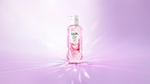
Another example that stands out is LUX’s Radiance-Boosting Essence Fragrance Body Wash range. We helped elevate the brand’s premium credentials through thoughtful packaging design. Light is the central design narrative, expressed through a diamond-inspired bottle shape, label, colour palette and pump decoration. Distinct facets and crisp edges refract light like a cut diamond, creating a premium, jewellery-like aesthetic that immediately communicates radiance, brilliance and sensory indulgence from shelf.
The design reflects the evolution of body care beyond basic cleansing towards efficacy, fragrance, beauty and self-care. It translates radiance technology into intuitive visual cues through light, transparency and diamond-inspired forms, balancing scientific efficacy with emotional appeal and transforming body skin radiance from a functional claim into a visible, tactile and sensorial everyday ritual.
Early results show the launch is already successfully expanding LUX’s consumer base, recruiting more than 70% of new consumers through e-commerce and social commerce channels.
With designers now co-creating in eight Personal Care Power Brands teams, there’s much more to come.
Frequently asked questions
What is Desire at Scale?
Desire at Scale is Unilever’s new growth engine. Rolling out across every brand and market, it’s a marketing model anchored in our SASSY approach – Superior science, Aesthetics, Sensorials, Shared by others and Young spirited. It enables us to design brands that people don’t just need but also want – brands that spark pleasure, trust and belonging – and convert that feeling into consistent growth.
How does design-driven growth support Unilever's Personal Care strategy?
Design-driven growth helps Unilever create more desirable, differentiated and premium brands. By embedding designers within Power Brand teams, the business can respond faster to consumer insights, strengthen brand appeal and support long-term growth across its Personal Care portfolio.
How is Unilever using AI-driven semiotics to build more desirable brands?
Unilever uses AI-driven semiotics to analyse thousands of cultural signals, trends and visual cues, fast. This helps design teams identify consumer desirability, so they can base creative decisions on reliable, measurable data, and create relevant, premium experiences that resonate in different markets.
Related articles
How Unilever made House of Fresh™ creator-led and culturally unmissable
Sarah Potter, Influencer & Media Director for Unilever Personal Care, shares how our House of Fresh™ activation during the FIFA World Cup 2026™ became the largest in-person influencer event in Unilever’s history and helped our brands reach billions.
Take a look at Unilever’s 2026 Cannes Lions-winning campaigns
The annual Cannes Lions International Festival of Creativity is where the new benchmark for global creative excellence is set. This year, Unilever brands received 35 awards. Here’s a run-down of the campaigns that won and the insights behind them.
How Unilever Personal Care is building brands in culture
As Chief Growth & Transformation Officer for Unilever’s €13.2 billion Personal Care business group, Rani Al Hajji leads category growth, customer strategy and brand experience. Here he shares how marketing is growing some of our biggest brands.