


The forces shaping consumer choice have changed
The reasons people choose brands haven’t changed. It comes down to ones they trust, remember and desire. And that they can find easily, when and where they want them.
What has changed is everything around that choice.
Creators now shape which brands people trust. Algorithms shape what they discover. And AI assistants increasingly shape what they buy.
In this complex world, the advantage goes to whoever learns fastest what works. Every activation creates data and insight that makes the next decision better. And that learning compounds across brands, markets and campaigns.
That’s when scale becomes an advantage.
If you build for it.
Demand creation: four capabilities, one system
Our social-first demand model has four capabilities: recommendation at scale, content at scale, influence at scale and media at scale.
Each one is powerful on its own. Together, applied in every market, they become stronger, because each one feeds the others.
Recommendation: AI makes superiority more valuable
This is about ensuring our superior products are discovered, chosen and recommended, by people and by the models powering AI assistants.
If you ask an AI assistant: “What’s the best shampoo for damaged hair?”, it won’t show you a shelf, it gives you a short list. And if you’re not on that list, you’re not in the choice.
AI models look for evidence, efficacy and proven claims. That plays to our strengths – we have around 15,000 active patents and superiority across more than 80% of our turnover.
But machines can only recommend what they can understand. Which is why we’re making a century of Unilever science machine-readable. We’ve structured 150,000 scientific documents so machines can read our claims and the evidence behind them.

Where we act, recommendation improves
We track more than a million prompts every week to see what’s driving recommendation. We then act and adapt accordingly.
In the last six months, 91% of the brand-market positions we track have improved. In eight of our ten key markets, a Unilever brand is now in the top three on the short list.
Dove, for example, is the most-mentioned brand in deodorants and skin cleansing in both the US and India, and Rexona is the most mentioned in deodorants in Brazil and Indonesia.
But discovery is only the start. We need to engage with people. And today, that takes a completely different scale of content.
Faster, better content
Today, every audience, platform and market needs its own content.
That means thousands of pieces. Done the old way, that would have been impossible. So, we built an AI-powered content engine. We codify what makes each brand distinctive, its core propositions and build it into the engine.
A video that took three weeks now takes three hours. We make 12 times more content than 2024, at 90% lower cost. And it’s performing better too.
But content can only take us so far. Brand preference is now shaped by a wide range of voices including creators, communities, experts and professionals. That’s why influence at scale matters.
Global capability, local voices
Today, we work with more than 500,000 creators, up from 75,000 in 2024. And it’s paying off. Creator content delivers around 1.5 times the return of brand content.
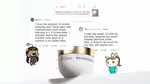
A good example is Dove’s partnership with Reddit, inviting reviews of its Intensive Repair 10-in-1 Serum Hair Mask and committing to publish the first 50, positive or negative, without edits. That’s the ‘said by others’ of our SASSY approach in its purest form – the community became the media.
Before the campaign, the product was the third bestselling hair mask in the US. It’s now No.1.
Better media decisions
We’re connecting media investment more closely to outcomes and moving spend faster towards what works. The flywheel is the advantage: more activity creates more learning; better learning improves decisions; better decisions make every euro work harder.
Across 40+ retailers and 20+ markets, proprietary technology is showing us where our investment is converting to sales. This has improved ROI on average by around 10%. We’re now expanding this to more than 65 retailers and 30 markets.
We’re also using proprietary technology to optimise how we buy digital assets. This is on track to deliver more than €65 million of efficiencies this year.
As machines get more capable, being human becomes more valuable
Technology can make content, optimise spend and recommend products. But it can’t make a brand matter to people.
Which is why we’re embedding our brands deeply in culture. Like Dove’s Bridgerton collaboration, Clear’s partnership with Red Bull Racing and Sunsilk’s range co-created with Babymonster, one of the biggest K Pop bands.
Unilever was also the Official Personal Care Sponsor for the FIFA World Cup 2026™. We activated across 120 markets, deploying more than 100,000 pieces of content and working with 50,000 creators. Limited-edition products connected to the campaign generated approximately €350 million in sales, while Unilever Personal Care achieved its highest summer value and volume share in three years.
Technology gives us scale. Culture gives us meaning. We are building brands that win through both.
Turning scale into learning power
Social commerce brings together content, creators, recommendation and shopping into one experience.
China is leading the way in accelerating social commerce. That learning is already travelling to Vietnam, Indonesia and the Philippines, where our beauty and personal care brands are growing ahead of the market and winning share.
Now multiply this across Unilever. Billions of interactions, millions of pieces of content and thousands of creators. That’s when scale becomes an advantage. Understand what’s working and leverage it in every brand in every market.
Faster learning. Better decisions. Higher return on investment.
Watch Leandro’s investor event presentation in full
https://www.youtube.com/watch?v=IpflQrlIY5o
Hear from Richard Slater, Unilever’s Chief R&D Officer, on how we create superior products
https://www.youtube.com/watch?v=39tJ8_VmkP8
Hear from Annie Peng, Unilever’s Global Social Commerce Lead, on how we’re building our social commerce capability
https://www.youtube.com/watch?v=MIBVWvOR4Ec
Frequently asked questions
How can AI be used for marketing?
AI marketing enables companies to create content at scale, optimise media spend and improve product recommendations through machine learning. Unilever uses AI-powered content engines to produce 12 times more marketing assets at 90% lower cost while simultaneously tracking over 1 million consumer prompts weekly to refine brand positioning in AI-driven search results.
How is Unilever using AI to boost demand generation?
AI is a key enabler of the shift in how demand is generated. The advantage lies in how it is applied. Our focus is on how AI amplifies creativity, sharpens implementation and powers social-first, creator-led marketing at scale. Our edge comes from combining AI with superior brands, deep cultural understanding and creator partnerships – enabling us to create demand in ways that are distinctive, scalable and hard for our competitors to replicate.
What is creator-led marketing?
Creator-led marketing uses content creators to produce authentic, platform-native content that reaches audiences where they already spend time. At Unilever, it operates alongside traditional advertising – not instead of it – as one component of a holistic brand-building strategy designed to earn attention, credibility and trust.
Related articles

What’s behind Unilever’s third quarter 2026 results?
Take a look at the brands, categories, markets and innovations driving our underlying sales and volume growth for Q3 2026.

How Unilever made House of Fresh™ creator-led and culturally unmissable
Sarah Potter, Influencer & Media Director for Unilever Personal Care, shares how our House of Fresh™ activation during the FIFA World Cup 2026™ became the largest in-person influencer event in Unilever’s history and helped our brands reach billions.

How Vaseline turned verified hacks into new products and partnerships
Vaseline Verified saw Unilever scientists test Vaseline beauty and lifestyle tips that were taking off on social media. Now these social-first viral hacks are sparking creator-inspired product launches, partnerships and growth.