

- Firstly, Pablo, can you tell us the idea behind the PaperFlex Consortium?
The objective is to accelerate the development and roll-out of responsibly designed paper-based flexible packaging solutions through R&D partnership.
The focus is on markets where flexible plastic packaging is widely used but there are limited formal collection and recycling systems. The aim is to design alternatives that are recyclable as collection systems improve, and biodegradable in the event that they unintentionally end up in the environment.
Unilever is a founding member alongside five other global consumer goods manufacturers. Rather than trying to tackle the same technical challenges separately, we saw an opportunity to move further and faster by working together.
Closing that gap is not straightforward. Flexible packaging must protect products, preserve shelf life, withstand complex supply chains and run efficiently on high-speed manufacturing lines, making paper-based alternatives one of the most technically demanding areas of packaging innovation today.
The consortium builds on the findings of the Foundation’s Paper-Based Flexible Packaging report, published earlier this year. This highlights the gap between current technologies and the ambition for recyclable and compostable flexible materials.
- How exactly will members work together?
Through this open and voluntary consortium, we’re all working to create flexible paper-based packaging at the performance, scale and cost required. Together, we’ll shape, fund and conduct collaborative trials in technologies that deliver product protection, shelf life and consumer usability, and test how materials perform on manufacturing lines.
Avoiding fragmentation and duplication of R&D efforts will help us to develop and scale promising innovations faster and at a lower cost, getting new options to consumers sooner.
The consortium also aims to help businesses comply with quickly emerging packaging regulations around the world.

- What are the pros and cons of using paper in packaging?
Right now, paper is the only widely recyclable and compostable packaging material on the market.
However, on its own, it’s insufficient as a packaging material. It has low barrier properties, it rips easily in industrial production settings and it doesn’t melt, which makes sealing the pack extra challenging.
This is why many paper-based packaging solutions today often require a thin layer of plastic film to provide barrier protection, and seal and protect what’s inside. A pack’s sealing properties are particularly important for liquid products like laundry detergent and shampoo.
Engineering paper to perform like plastic is one of the most technically complex materials science challenges our R&D teams face today.
- What has Unilever already been doing about this issue?
To accelerate our paper-based flexibles innovation, we have more than doubled our investment in packaging R&D in recent years. We have a team of more than 60 materials scientists working on next-generation paper-based materials and advanced barrier coatings.
To date, we’ve assessed over 3,000 emerging materials and technologies, including those from other industry sectors – like pharmaceuticals and electronics – that aren’t currently used in packaging.
They include bio-sourced and mineral-based materials such as plant-based proteins and ultra-thin plastic-free coatings derived from naturally abundant compounds like silica.
There’s no one-size-fits-all solution. Innovations must be tailored by product and geography, and even by where it lives in a household. For example, soap packaging that’s kept in a bathroom has to withstand extremely humid conditions.
It’s equally important to ensure the paper fibres used are sustainably sourced, to avoid unintended consequences that might run counter to our goals.
- Does Unilever have any solutions already on the shelves?
We have a range of paper-based flexible technologies moving to deployment in-market.
For example, in the UK we’ve launched recyclable paper-based Knorr stock cube wrappers. Because stock cubes contain fat content, the packaging needs to stop grease from soaking through or staining the paper, which can weaken the pack and affect shelf life.
This isn’t a simple material swap: it requires a full supply chain transformation.
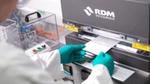
We’ve had to adjust our factory equipment to ensure the folded paper wrappers can run smoothly and reliably on our production lines.
Crucially, these early-stage launches are helping us shift our supply chain, adapt our factory lines and understand how consumers react to the new packs.
- Why is the PaperFlex Consortium so important?
For recyclable and compostable paper-based flexibles to be viable requires a step-change in the packaging industry, shared learning and economies of scale.
No single company can address the cost, infrastructure and scaling barriers alone.
Collaborations and partnerships are absolutely crucial to helping solutions reach the market more quickly, increase collective impact and reduce costs over time.
Frequently asked questions
What is the PaperFlex Consortium and what will it do?
The PaperFlex Consortium, convened by the Ellen MacArthur Foundation and powered by (RE)SET, includes Colgate-Palmolive, Mars, Nestlé, PepsiCo, Procter & Gamble and Unilever as founding members. It aims to accelerate the development and scaling of responsibly designed paper-based flexible packaging through R&D partnership, focused on markets with limited formal collection and recycling systems. It is guided by a dual end-of-life ambition covering both recyclability and biodegradability.
What is paper-based flexible packaging and how does it work?
Paper-based flexible packaging is an innovative recyclable and compostable material designed to replace traditional plastic films in product packaging. It combines sustainably sourced paper fibres with advanced barrier coatings to deliver product protection, seal integrity and shelf-life performance for consumer goods like food and personal care products.
What technical challenges are slowing down the widespread adoption of paper-based flexible materials?
Paper lacks inherent barrier properties and thermal sealing capabilities that manufacturing lines require for product protection and shelf stability. Engineering solutions demand specialised coatings and machinery adaptations. Scaling these innovations requires collaborative R&D investment beyond the capabilities of any single company.
Related articles

The challenges of using recycled plastic and how we’re responding
Using recycled plastic to create new packaging sounds like a simple solution to plastic waste, but it’s not as straightforward as it might seem. We asked two of our packaging experts to explain what’s involved in scaling up its use across our brands.

Unilever and Business Coalition continue call for global plastics regulations
Following the outcome of the latest UN plastics treaty talks, the Business Coalition for a Global Plastics Treaty, co-chaired by Unilever, explains why harmonised regulations remain key for tackling plastic pollution and for business.
Unilever boosts investment in packaging R&D to cut virgin plastic
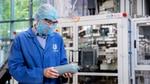
At our Global Packaging R&D Centre, we’re putting significant investment into developing new sustainable packaging materials and technologies. Read how this is accelerating the delivery of our plastic goals.