
Forests sustain life on Earth. They help regulate the climate and are the second-largest carbon store after oceans. They provide habitats for wildlife and support the livelihoods of people living nearby. But alarming levels of deforestation have resulted in biodiversity loss and are a key driver of climate change. This impacts businesses, economies and communities.
Healthy and resilient supply chains are vital to Unilever’s success. Our goal is to maintain no deforestation across our primary deforestation-linked commodities: palm oil, paper and board, tea and soy.[a] [b] These supply chains account for over 60% of our land footprint.
Implementing our strategy
We’re fundamentally reshaping the way we source our commodities through strong governance, developing new skills, investing in systems and networks that increase transparency and traceability, and working with others to support nature around our sourcing areas. We’re also exploring product reformulation.
Our work can be divided into these five areas:
- Working with suppliers
- Supporting smallholder farmers
- Investing in infrastructure and technology
- Partnering with others for nature protection
- Developing innovative, alternative ingredients
Working with suppliers
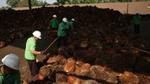
We prioritise suppliers who share our sustainability values – developing deep relationships based on the mandatory requirements set out in our Responsible Partner Policy and our People & Nature Policy (see related guidelines (PDF 1.63 MB)).
Our actions with suppliers include:
- Prioritising sourcing from areas at lower risk of deforestation
- Using suppliers that have received third-party certification from an approved body
- Strengthening our supplier contractual framework and creating first-of-their-kind deforestation-free independent verification protocols for our key crops
- Driving transparency and accountability by publicly sharing our supplier lists, and for palm oil, sharing our mill (PDF 205.48 KB) and facilities (PDF 235.71 KB) lists and grievance tracker (PDF 1.32 MB)
Supporting smallholder farmers
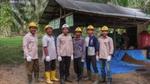
Mapping smallholder farmers in our supply chain and empowering them to farm sustainably is critical to maintaining no deforestation:
- For palm oil, we’re working with Meridia to understand the geographical spread of our smallholders – mapping more than 55,000 so far. Our smallholder hub programme also trains smallholders to implement good agriculture practices.
- In tea, we’ve developed the innovative tracetea app to digitally map tea growers at scale, and we’re helping our smallholders achieve trustea certification across South Asia.
Investing in infrastructure and technology
Our investments to maintain deforestation-free sourcing include:
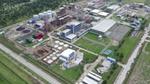
- Over €280 million in Unilever Oleochemical Indonesia (UOI), since 2021, to directly source traceable, deforestation-free palm oil and palm kernel oil – removing intermediaries
- Use of satellite imagery and geolocation data to monitor deforestation risk in our supply chain, working in partnership with WRI, NASA, Google, FAO and others on shared access to information
Partnering with others for nature protection
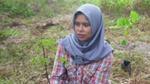
Focusing on our main sourcing locations and the surrounding areas, we’re taking landscape and jurisdictional approaches to protecting and restoring natural ecosystems and partnering with experts on the ground to implement projects. This helps reduce the risks of deforestation and biodiversity loss.
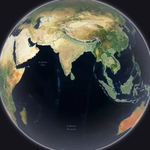
- By the end of 2025, we had helped protect and restore 660,000 hectares of natural ecosystems, primarily in South East Asia.
- As part of the Rimba Collective, and made possible through our Climate & Nature Fund, we’re working to protect and restore almost 50,000 hectares of rainforest across South East Asia.
Developing innovative, alternative ingredients
We’re reformulating some of our products to use alternative ingredients not linked to deforestation.
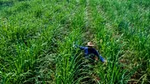
- We’ve invested £23 million in a partnership with Nufarm to grow a type of sugar cane to extract a plant-based oil for use in our cleaning products.
- We’ve reformulated our soap bars in India and Indonesia with novel structuring technology to reduce fatty matter content.
Our deforestation-free achievements
Unilever’s inclusive approach to sourcing from tens of thousands of smallholder farmers as well as larger plantations, and the constant process of onboarding and upskilling these smallholders, means that in practice, we’re working to maintain 95% deforestation-free purchase volumes of palm oil, paper and board, tea and soy each year for our primary deforestation-linked commodities.[a]
At the end of 2025, 97% of our palm oil, paper and board, tea and soy[b] purchase volumes were deforestation-free, based on Unilever’s requirements. We’re proud of this achievement, and our influence in driving sustainability across wider industry.
All primary deforestation-linked commodities 96.6%
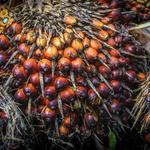
Palm oil 96.8%

Paper and board 98.1%
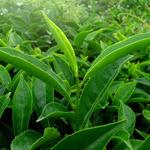
Tea 93.4%
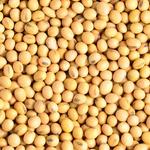
Soy 95.3%
-
Behind the numbers
Both Unilever and our suppliers are audited by external independent parties, who use desk and site evaluations to check that our deforestation-free requirements and standards are being met. Our auditors follow the deforestation-free verification protocols that were independently created for our key crops.
Downloads
Our forest-risk commodity footprint
Learn more about our sustainable sourcing and deforestation-free actions in palm oil, paper and board, tea and soy.
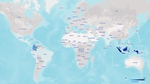
Palm oil
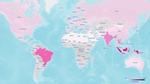
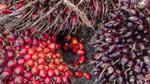
This commodity is important to Unilever due to our influence as a significant buyer. We’re continuing to tackle sustainability issues in palm oil by protecting tropical forests and peatlands, increasing our transparency and traceability, and respecting and advancing human rights.
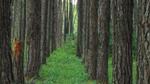
Paper and board
Unilever buys paper and board for packaging our products and transporting them to customers.
We focus on buying certified material – both recycled and virgin. The certification schemes we use are the Forest Stewardship Council (FSC) and the national system developed under the Programme for the Endorsement of Forest Certification (PEFC).
We have a full chain of visibility of paper and board, from plantation to Unilever factory, going further than many of our peers to understand our supply chain. We trace our purchases from packaging suppliers back to paper mills to see if there’s any risk of future deforestation.
We also continue to work with our suppliers to expand certification and traceability in our paper and board supply chain.
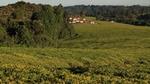
Tea
Our commitment to sustainable tea is long-standing. We sold our main tea business in 2022 but continue to source tea in some markets.
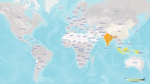
We buy tea certified by Rainforest Alliance or trustea, of which we are a founder member. Our geospatial analysis – in partnership with NGIS – of our supply base of large, uncertified tea estates and bought leaf factories has found a negligible risk of commodity-driven deforestation.
Our team in India has worked hard to bring traceability into our supply chain. Through the innovative tracetea app, which we helped develop, trustea has mapped more than 24,000 tea smallholdings to ensure they’re deforestation-free.
Understanding which farmers grow our tea and the challenges they face is vital to create positive change in the supply chain. We help smallholders bring sustainable practices into their tea businesses, improve welfare for workers, and move to certification. Investing in smallholders, who produce 60% of the world’s tea, is one way we’re empowering communities to grow sustainably and care for land and soil.[c]
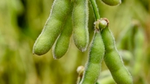
Soy
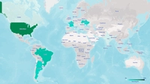
To make sure we buy only deforestation-free soy for our foods, we source from places with a negligible risk of deforestation (as defined in our negligible risk protocols) (PDF 671.77 KB). We also use third-party verification to ensure our suppliers meet our requirements and standards for a deforestation-free supply chain and that segregated material is certified by Proterra or the Round Table on Responsible Soy.
If a supplier buys only from areas with a negligible risk of deforestation, they can declare this themselves. We also collect traceability information through our partner 3Keel.
When we buy from high-risk origins like Latin America, we ensure that suppliers have controls in place for traceability to keep deforestation out of our supply chain. We also consider segregated material certified by Proterra or the Round Table on Responsible Soy, while helping farmers adopt better farming practices and gain certification.
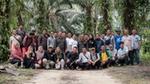
Protecting people
Our goal to maintain a deforestation-free supply chain for our primary deforestation-risk commodities is intrinsically linked to protecting the rights of those who live and work on the land.
As set out in our People & Nature Policy (PDF 2.04 MB), we expect our suppliers to respect and promote human rights and be a force for good for nature and people throughout their operations and supply chains. This is in line with our Human Rights Policy Statement (PDF 4.42 MB) and our Unilever Principles in Support of Human Rights Defenders (PDF 2.9 MB), and communicated via our Responsible Partner Policy (PDF 4.45 MB).
Our grievance process gives everyone a way to report environmental or human rights concerns.
What's next?
We support the work of the European Union to tackle deforestation, including through the European Union regulation (EUDR) on deforestation-free supply chains. We understand that for all parties, clear guidance is extremely important for effective implementation of the regulation.
We are also calling for the global adoption of deforestation‑free policies, to enable fair competition and forest impact at scale. We believe that if other markets adopt compatible regulation, it would help close leakage loopholes and send a clear demand signal for deforestation-free products that would level the playing field, raise standards across the board, and accelerate positive forest outcomes in support of our climate and nature goals and wider national 2030 targets.
(1, 2) In 2020, we set a goal to achieve a deforestation-free supply chain in palm oil, paper and board, tea, soy and cocoa. Having achieved 98% in 2023, we then set a new goal to maintain deforestation-free sourcing on an annual basis (95%). This commitment is aligned with SBTi guidance and forms part of Unilever’s 2030 Scope 3 Forest, Land and Agricultural (FLAG) emissions reduction target.
(1, 2) Following the demerger of our Ice Cream business on 6 December 2025, all territories and activities within the scope of the Ice Cream business have been treated as discontinued operations in our consolidated financial statements. As such, cocoa is no longer a primary deforestation-linked commodity in scope of our target, and our progress on deforestation-free sourcing of cocoa is not stated.