
Climate
Climate action has long been part of how we do business. But the world must move faster to avoid the worst effects of climate change. We’ve set more ambitious climate targets and identified clearer actions to respond to this challenge.
Unilever GlobalChange location

Unilever’s sustainability targets play a critical role in futureproofing our business, ensuring focus and urgency in the areas where we can deliver the most impact. Discover how we’re taking action on our four priority sustainability focus areas: climate, nature, plastics and livelihoods.
Transforming packaging systems requires innovation, infrastructure and collaboration across the value chain.
So, we’re taking action on plastics in three key areas:
Reduction: Reducing our virgin plastic footprint
Circulation: Designing for reuse, refill and recycling, and developing the infrastructure necessary for these systems to work
Collaboration: Working with partners across the packaging value chain and advocating for well-designed, harmonised regulations on plastic
Packaging plays a vital role in elevating the consumer experience and the performance of our products.
But plastic packaging is ending up in the environment, and plastic waste is projected to rise sharply. Our packaging is part of this problem. We’re determined to change this.
Through our ‘reduce, circulate, collaborate’ strategy, we’re changing how our packaging is sourced, designed, used and disposed of.
Our portfolio includes two main types of packaging: rigids, such as bottles and jars, and flexibles, such as pouches, sachets and films.
72% of our portfolio uses rigid plastic packaging
For rigids, our focus is on using less plastic packaging and improving recyclability.
28% of our portfolio uses flexible plastic packaging
For flexibles, we’re working with industry partners to accelerate the deployment of paper-based flexible packaging, among other solutions like reuse and refill models.
Having increased our investment in packaging research and development, we continue to make progress towards our ambitious, multi-year plastics sustainability targets.[a]
In 2025, we:
2025 was an important milestone in our plastics sustainability journey, but there is still much more to do.
Our focus now is on:
These priorities are embedded in our Business Group roadmaps, aiming to innovate and build on our progress.
Unilever is reducing virgin plastic by increasing the use of post-consumer recycled plastic (known as PCR), designing lighter packaging and scaling alternative materials, formats and models.
Since 2019, we’ve reduced our use of virgin plastic by 29% – and 25% of our plastic packaging is now made from recycled plastic.
We’re designing packaging so it can be reused, refilled or recycled, helping to keep materials in use and out of the environment.
We’re expanding at-home reuse–refill options and working with other companies and partners to test shared reuse systems on a larger scale.
Alongside this, we’re investing in – and pushing for – improvements to global collection, sorting and recycling infrastructure.
57% of our plastic packaging is reusable, recyclable or compostable (as of 2025).[b]
Broken down by packaging type, this means that 75% of our rigid plastic packaging and 15% of our flexible plastic packaging can now be recycled, reused or composted.
Hard-to-recycle flexible plastic packaging remains one of the consumer goods industry’s biggest and most complex environmental challenges. We recognise our packaging is part of this problem. We’re investing heavily in packaging R&D and working with industry partners to develop viable, scalable alternatives to change this status quo.
There is no single solution. We’re working towards a future where flexible plastic is reduced, reused, recycled or composted.
Where elimination through reuse and refill isn’t feasible, alternative materials are also required. Paper-based flexible packaging has the potential to significantly reduce waste and pollution and will play an increasingly important role. We’re focused on bringing more paper-based flexibles to market.
Unilever is one of more than 45 businesses, NGOs, investors and academics to have recently endorsed the Ellen MacArthur Foundation’s paper-based flexible packaging report which sets out a clear framework for a responsible material transition.
Industry commitments and voluntary initiatives have driven significant progress. But ending plastic pollution requires collective, coordinated action and effective policy to create a level playing field, encourage investment and scale solutions.
We’re calling for mandatory, well-designed extended producer responsibility (EPR) schemes that are fair, inclusive and hold businesses accountable for their packaging choices.
With the Business Coalition for a Global Plastics Treaty, we’re supporting harmonised regulations on plastic to mobilise investment and drive innovation.
We’re working to end plastic waste by collaborating with others, reducing our use of virgin plastic, and finding ways to keep our packaging out of the environment.
To help us do this, we have set targets that are stretching, ambitious and designed to drive progress on key areas, such as reducing virgin plastic and tackling hard-to-recycle flexible plastic.[a]
Reduce our virgin plastic footprint – by 30% by 2026, and 40% by 2028
Use 25% recycled plastic in our packaging by 2025
100% of our plastic packaging to be reusable, recyclable or compostable – by 2030 (for rigids) and by 2035 (for flexibles)[b]
Collect and process more plastic packaging than we sell by 2025
Find out more about our progress in our Annual Report and Accounts (PDF 6.16 MB)
Approximately 72% of our total plastic packaging footprint is rigid, while flexible plastic packaging makes up the remaining 28%.
Charts require JavaScript to be enabled.
Percentages are based on our plastic packaging (tonnes) from 1 January to 31 December 2025.

Our brands are reducing or replacing virgin plastic in their packaging – either with recycled plastic or other materials like glass, aluminium or paper.
Packaging materials must be tailored to different conditions and geographies, and also to the specific formulations and packaging needs of our diverse product portfolio.
For example, when developing paper-based pots for Pot Noodle in the UK, our Packaging R&D team had to ensure they maintain high quality throughout their lifecycle – from transportation to the cooking process.

Engineering paper to perform like plastic is a complex material science challenge. Alternatives must deliver the right strength, barrier performance and product protection, while also being responsibly sourced and designed to avoid replacing one set of problems for another.
Our long-term aim is to develop and deploy paper-based flexible packaging materials that are both recyclable and compostable, meaning it biodegrades and does not persist if it ends up in the environment. Our Packaging R&D teams have been testing a wide range of solutions including bio-sourced, microbe-derived and ultra-thin plastic-free coatings that meet this criteria.
Bringing more paper-based flexibles to market will require a step-change in the packaging industry, shared learning, economies of scale and infrastructure development.
To reduce plastic now, we’re introducing some early-stage, ‘less plastic’ solutions – such as paper–plastic laminates. We’re starting with solid and powdered products. For example, we’ve launched widely recyclable paper-based stock cube wrappers for Knorr in the UK and Cup-A-Soup pouches in Europe. These launches are helping us better understand how to source, manufacture and distribute paper-based flexibles, as we work to adapt our factory lines and shift our supply chains.
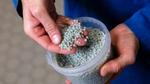
In 2025, we achieved our target to use 25% recycled plastic in our packaging. And we purchased more than 150,000 kilotonnes of recycled plastic – more than three times the amount we sourced in 2019, showing how far we’ve come.
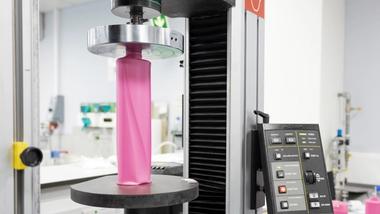
Sourcing and scaling high-quality PCR is a complex challenge. Recycled plastic must meet the same high standards for safety, durability and consumer experience as virgin plastic. For example, Domestos packaging must withstand powerful bleach formulation without affecting the packaging’s integrity and safety. Across food, beauty and personal care, packaging must meet strict performance and regulatory standards.
Our Packaging R&D and Procurement teams work hand-in-hand with suppliers to overcome these challenges. We use advanced digital testing and modelling tools that can predict the colour and performance of the recycled plastic packaging we use. This reduces the need for physical prototypes and is cutting development time by around 25%.
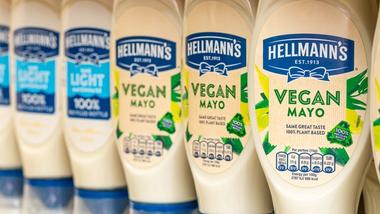
We also embed our technical experts in our network of suppliers to co-develop improved recycling and manufacturing processes, efficiency and material quality. In the US, Canada and Brazil, for example, we built new capabilities in sorting, cleaning and blending recycled plastic resins. As a result, Wonder Wash laundry detergent bottles in the UK and Europe and Hellmann’s squeeze bottles in Brazil now contain up to 100% PCR, where technically feasible.
To scale recycled plastic, strong recycling systems and the right policies need to be in place.
We work with partners like Circulate Capital to help close recycling and waste management gaps and improve access to recycled content. Through the Circulate Capital Ocean Fund, we’re directly investing in collection and recycling infrastructure in India, Indonesia and Latin America.
And in the US, investments in organisations such as Closed Loop Partners and Circular Services are strengthening collection, sorting and recycling systems and increasing our supply chain resilience.
Alongside this, we advocate for well-designed extended producer responsibility schemes to unlock investment, strengthen recycling systems and help build more competitive markets for recycled content.

We’ve tested more than 50 reuse and refill models worldwide.
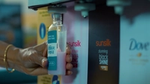
Some are gaining traction. We’re expanding at-home reuse–refill options through our deodorant brands like Dove and Wild. In the UK, Cif’s Infinite Clean all-in-one spray features a premium reusable trigger that reduces plastic by 50%. In Indonesia, we have a growing network of more than 1,000 refill outlets offering Home Care products from brands like Rinso, Sunlight and Wipol.
Not every pilot leads to scale, but every pilot delivers insights. We’ve learnt changing consumer habits takes time, and what works in one place might not work in another. Scaling new packaging formats and models requires action across the value chain – from brands and retailers to waste management and policymakers.
That’s why we’re also working with industry partners to test shared reuse systems on a larger sale. For example, Unilever is taking part in the Consumer Goods Forum’s city-wide reuse–refill initiative launching in Ottawa, Canada, in 2026.

Our biggest challenge when it comes to recyclability is finding viable and scalable replacements for things that are hard to recycle, like plastic sachets, bottle pumps and spray triggers. Our rigid and flexible packaging types pose unique challenges, so we’re taking different approaches and have set different targets for each.
When it comes to rigid packaging – things like bottle caps and spray pumps – we’re designing for recycling while also working to increase actual recyclability, in practice and at scale. For example, we’re rolling out mono-material plastic pumps and triggers across our brands, including TRESemmé, Vaseline and Cif.
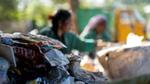
In 2025, we collected and processed more plastic than we sold, with 12 countries achieving collection and processing rates of 100% or more.
Designing our packaging for recycling is only the first step. Our teams around the world work with governments, municipalities, waste management companies, recyclers, community-based collectors and NGOs to expand collection, improve sorting and connect collected material to buyers.
In many countries, plastic collection is part of an informal economy. The people doing this work are an integral part of the solution – without them, plastic collection cannot scale. We have several programmes in place. For example, in India, we launched Project Utthaan that focuses on linking waste workers with government social protection schemes. And in Vietnam, our partnership with VietCycle has provided training, PPE and other support to more than 3,000 waste collectors since 2021.
We’re also working with peers, experts and NGOs to build a common approach and support a socially just circular economy. Through the Fair Circularity Initiative, we aim to advance and adopt the initiative’s 10 Fair Circularity Principles.
If there’s one thing we’ve learnt from our efforts on plastic over the years, it’s that collaboration is essential – across industries and with governments, innovators and coalitions of change.
Our own targets and wider industry initiatives can only go so far – and we simply cannot reshape the landscape around plastic alone. So we’re working closely with others to accelerate more widescale changes to regulations, systems and infrastructure.
We’re long-term collaborators with the Ellen MacArthur Foundation. In 2018, we were among the first to sign the Global Commitment – the world’s largest voluntary effort on plastic waste and pollution, now uniting over 1,200 businesses representing 20% of the global plastic packaging market.
In 2025, we endorsed both the 2030 Global Commitment and the Plastics Agenda for Business, calling for whole-industry action, collaboration and regulations to accelerate progress.
We’re also members of the Consumer Goods Forum’s Coalition of Action on Plastic Waste, which brings together the biggest players in our industry to collaborate on progress towards a circular economy for plastic packaging. We contributed to the Consumer Goods Forum’s Golden Design Rules for optimal plastics design, production and recycling.
In several countries, we’re members of Plastics Pact Network. These pacts bring together national governments, NGOs and business as they join forces to avoid plastic waste across their value chains.

We joined the Business Coalition for a Global Plastics Treaty – an advocacy group convened by the Ellen MacArthur Foundation and the World Wildlife Fund (WWF) – to support the development of an ambitious and effective treaty alongside more than 250 other brand owners, retailers, financial institutions, packaging producers and waste management companies.
Despite limited progress at the latest plastics treaty negotiations, we remain committed to supporting governments to develop harmonised regulatory frameworks across markets that drive investment and innovation – such as effective, locally tailored extended producer responsibility programmes.

Extended producer responsibility (EPR) schemes can strengthen recycling systems by ensuring that funding is reinvested into waste management and packaging innovation.
They can also give governments and the wider value chain better visibility of what packaging is placed on the market, and how it’s managed.
Unilever supports mandatory and well-designed EPR policies where producers are fairly and financially responsible for the costs associated with the end-of-life of their packaging put into the market, including collection, sorting and recycling.
We call for EPR schemes that reflect local waste management needs. Social inclusiveness and fairness are essential, particularly in markets where informal waste sector workers play a key role.
We signed the Ellen MacArthur Foundation’s public statement on EPR, as well as the Consumer Goods Forum’s position on EPR design and guidance on EPR in low- and middle-income countries.
Climate action has long been part of how we do business. But the world must move faster to avoid the worst effects of climate change. We’ve set more ambitious climate targets and identified clearer actions to respond to this challenge.

The world – and our business –needs resilient natural and agricultural ecosystems to thrive. We’re committed to contributing to the protection and regeneration of nature within and beyond our value chain.
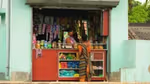
The impacts of inequality go far beyond income – to health, human rights and economic growth. So we’re working to improve the livelihoods of people in our global value chain.
(1, 2) Following the demerger of our Ice Cream business on 6 December 2025, all territories and activities within the scope of the Ice Cream business have been treated as discontinued operations in our consolidated financial statements. As a result, our sustainability progress metrics focus on our four continuing Business Groups (Beauty & Wellbeing, Personal Care, Home Care and Foods). See our Annual Report and Accounts 2025 for more details.
Have you got a few minutes to complete a survey? We would love to hear about your experience using Unilever.com.