

Unilever’s world-class supply chain plays a strategic role in driving business growth by innovating faster, improving operational efficiency and responding to an increasingly uncertain global landscape.
We spoke to Vicky Cuthbert, Chief Product Supply Chain Officer for Personal Care, to find out what that means in practice.
- What are your priorities as Chief Product Supply Chain Officer?
Every day, Unilever moves products from hundreds of factories through complex global networks to reach billions of consumers around the world. My priorities are to continually improve the speed, agility and resilience of our operations by investing in our people, AI and digital technologies, so that we can make better decisions, respond faster and deliver for our customers and consumers.
Demand cycles for consumer brands have shortened from months to hours. To meet that demand, we’ve had to increase our speed and responsiveness across our supply chain, for example by reducing concept-to-pilot timelines to 12 weeks and building more predictive customer operations and stronger digital capability across our teams.
The Dove x Crumbl collaboration at Walmart is an example of what this looks like in action. Sparked by social listening, the limited-edition launch was shaped by real consumer interest, while replenishment, production and variant drops were driven by live consumer feedback and demand signals. Together they helped shape one of Walmart’s most successful innovation launches.
- What is supply chain resilience and how do you improve that?
Resilience is how well we’re able to anticipate and respond to volatility and disruption. Over the past 100 years, our supply chains have faced many disruptions, from energy price hikes and extreme weather events to maritime bottlenecks. We have responded by strengthening their agility and resilience, for example by transitioning to renewable energy and investing heavily in the digital transformation of our supply chain operations.
Today, AI is improving demand and supply forecasting. Digital twins – computer simulations of manufacturing processes – are optimising manufacturing and reducing energy use. And we’re using various tools to give us an ever-more accurate view of our logistics operation.
We have created a tech ecosystem that’s allowing us to identify potential disruption early, assess scenarios and make faster, better-informed decisions that help us stay future-fit.
- How does supply chain help deliver a major global retail activation?
Take our sponsorship of the FIFA World Cup 2026™ as an example. We activated 35 brands with 180 limited-edition products across over 120 countries and millions of retail locations. Our job is to fulfil the demand created around the event.
From a supply chain perspective, it doesn’t get much more complex than that, so precision planning is the starting point.
When we know what products each brand is promoting, we need to ensure the material sourcing, manufacturing and logistics capacity is in place to produce and deliver them.
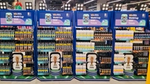
Once the production plan is in place, the focus shifts to execution: getting the right products to the right retailers, at the right time – in many cases in display executions. For this tournament, that included hundreds of thousands of small ‘mom and pop’ stores as well as our major retail customers.
Then our marketing campaigns activated on social, in-store, out-of-home and on TV with more than 50,000 creators globally. This level of activity means there can be demand spikes at any time. So while we plan meticulously, we also have to remain highly agile to respond to sudden rushes on our products.
For example, while watching the FIFA World Cup 2026™ final, my team and I were eager to find out which winner’s editions we’d soon be starting to produce. Just days after the final, the special limited-edition ‘World Champions’ Rexona deodorants were ready for dispatch to Spain.
These end-to-end capabilities underpin how we deliver products across markets every day.

- How do you handle demand changes?
We invest heavily in connecting closely with our customers and consumers so we can respond faster to changes in demand.
For example, our AI-enabled customer connectivity model with Walmart integrates forecast and sales data, connecting consumer purchases back to material sourcing. In a Mexico pilot, it delivered 98%+ on-shelf availability, reduced inventory and supported category growth.
We’re also continually expanding our ability to serve consumers directly. In China, where social commerce is popular, our factory-to-consumer operation in Hefei manages 31,000 orders a day across more than 400 products, fulfilling orders 75% faster and reducing logistics costs by almost a quarter.
- How is AI transforming supply chain management?
AI in supply chain helps us make better decisions at scale, but human expertise remains key. Our people provide the judgement, context and experience needed to make the final decisions.
Data and AI enable us to process much more information than would be possible manually, significantly improving the accuracy of our forecasting and scenario planning, as well as optimising logistics routes.
One example is our Forecast Engine Utility. This combines machine learning and data science to generate a 104-week forecast every week across more than 5 million product–customer combinations in 40 operating markets.
At Hefei, AI has contributed to an 8% increase in overall equipment effectiveness (OEE) and a 20% reduction in waste, while our factory in Raeford, North Carolina, which was critical in producing products for the FIFA World Cup 2026™, uses digital twins to achieve superior quality personal care products as well as a 20% reduction in waste and a 10% uplift in capacity.

- How will digital technologies change Unilever’s supply chain in the future?
We’re moving from using AI in individual tools to everything being interconnected. Our five-year Google Cloud partnership will create an enterprise-wide digital backbone that turns data into insights and supports agentic workflows across business processes.
Manufacturing will become increasingly predictive and scenario-based. We’re rolling out more than 40 AI-powered digital twins across our network over the next 18 months, helping teams identify issues earlier, simulate scenarios faster and make smarter decisions.
The biggest opportunity isn’t just deploying AI, it’s fundamentally redesigning our underlying processes so people and AI can work together effectively.
Frequently asked questions
What is supply chain resilience and why does it matter?
Supply chain resilience is the ability to anticipate, prepare for, respond to and recover from disruptions while maintaining continuous business operations. Companies with strong supply chain resilience strategies – like Unilever – can navigate uncertainties while maintaining customer service levels and operational efficiency, ultimately protecting revenue and shareholder value during volatile market conditions.
What role does AI play in modern supply chain management?
AI in supply chain management serves as the intelligence layer that enables faster, more accurate operational decisions while human expertise provides essential judgement and context. In large global companies like Unilever, the technology processes information volumes impossible to analyse manually, transforming supply chain operations from reactive to predictive while strengthening resilience against market volatility and operational disruptions.
How do global companies manage supply chain complexity during major retail activations?
Global companies manage supply chain complexity during major activations through precision planning, cross-functional alignment and digital technologies that enable rapid response to demand fluctuations. As Official Personal Care Sponsor of the FIFA World Cup 2026™, Unilever activated 35 brands with 180 limited-edition products across 120+ countries and millions of retail locations, requiring synchronised execution across marketing, supply chain, procurement and retail partnerships.
Related articles

How Unilever Personal Care is building brands in culture
As Chief Growth & Transformation Officer for Unilever’s €13.2 billion Personal Care business group, Rani Al Hajji leads category growth, customer strategy and brand experience. Here he shares how marketing is growing some of our biggest brands.

Unilever x Accenture partnership scales digital twins across global manufacturing
Building on its existing collaboration, Unilever is partnering with Accenture to scale smarter manufacturing, rolling out more than 40 new digital twins across its network over the next 18 months.

How Unilever’s digital transformation is driving operational excellence
Unilever’s digital transformation is reducing complexity across the business and building capacity for growth. Chief Enterprise Technology Officer, Steve McCrystal, explains how we’re using innovative technology to deliver operational excellence.