

Against a backdrop of worsening climate change impacts that pose risks to our business, COP31, the UN climate summit in Antalya, Türkiye, presents an important opportunity for Unilever to share our work to reduce greenhouse gas (GHG) emissions and to call for government policies that unlock faster climate action at scale.
Electrification is a priority theme of the summit, to help drive industry uptake of renewable energy. Here, Fiona Duggan, Unilever Global Sustainability Senior Manager – Climate Advocacy, who is at COP, and Sai Gadamsetty, Senior Supplier Climate Programme Manager, share practical examples of renewable electricity deployment in our operations and supply chain, and set out how governments can support a wider shift to industrial electrification.
- How does electrification form an important part of Unilever’s decarbonisation strategy?
Fiona Duggan: Unilever has set a target to achieve a 100% absolute reduction in scope 1 and 2 GHG emissions by 2030, versus our 2015 baseline.[b]
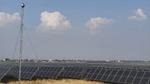
By the end of 2025, we had reduced GHG emissions in our operations by 77%, versus 2015.[a] It’s where we have most control over our climate impact, and renewable electricity has been a key driver. We’re using power purchase agreements (PPAs) in Spain, Poland and India that offer stable prices over a set period and in some cases lead to cost savings. We’re also generating solar energy on-site, and where renewable electricity is not available from local suppliers, we’re purchasing renewable electricity certificates. In Türkiye, host country of COP31, 100% of the electricity used across our sites is matched with renewable electricity.
We’ve also started to electrify our heating and cooling in our factories. To replace natural gas, we’re installing electric boilers and heat pumps, for example in India and the Philippines, and undertaking energy efficiency upgrades. The exact combination depends on local context and the factory needs – in Indonesia, we also use biomethane from palm oil mill effluent. Whatever our approach, switching to renewables helps boost resilience by reducing our exposure to volatile fossil fuel markets.
Governments can support industrial electrification by ensuring the right enabling frameworks are in place.
Sai Gadamsetty, Senior Supplier Climate Programme Manager
- How can Unilever’s climate advocacy support uptake of renewable electricity?
FD: COP31 is an important opportunity for businesses to urge policy-makers to raise national climate ambition, by advocating for the acceleration of the transition to low-emission, electrified economies. Industrial electrification, built on the scale-up of renewable energy and the phase-out of fossil fuels, isn’t just relevant to Unilever’s operations, it’s an important unlock for our supply partners – we want them to have affordable, easy access to renewable electricity wherever they operate.
That’s why we chose to join We Mean Business Coalition’s new Electric Advantage Leadership Alliance, announced here at COP31. It brings companies together to amplify the business case for electrification and support the policies and investments needed to scale it.
Businesses like ours are implementing solutions and can help demonstrate what works. Governments can drive faster uptake by lowering electricity costs and accelerating grid investment. That requires stable policies that translate ambition into national plans and turn climate commitments into emissions reductions.
- How is Unilever collaborating with suppliers over the greatest emissions reduction opportunities?
Sai Gadamsetty: Most of Unilever’s GHG emissions come from the raw materials, ingredients and packaging we buy.[a] That’s why our Supplier Climate Programme is another key focus area as we work to reduce scope 3 emissions by 2030.
Unilever has a target to reduce our absolute scope 3 energy and industrial emissions by 42% by 2030, versus 2021.[c]
By the end of 2025, we were collaborating with almost 200 supply chain partners in the programme to help them measure, share and reduce the climate impact of materials we source. We focus on the suppliers who contribute most to Unilever’s emissions.
We’ve been working closely with a subgroup of suppliers to address some of the biggest emissions hotspots across our shared value chain. For example, we partnered with key aluminium can suppliers on the use of low-carbon energy to reduce emissions from our aerosol packaging.
- How is Unilever supporting the uptake of renewable electricity by key suppliers?
SG: The progress of our Supplier Climate Programme depends on our partners having access to modern electricity grids and long-term renewable electricity purchasing arrangements, coupled with access to on-site projects delivery support, and finance. That’s why we’ve launched ‘Project REshift’, an initiative designed to accelerate the energy transition in our upstream supply chain. Electrification is a key focus area.
We’re working with multiple implementation partners across markets to provide market intelligence, support both roadmap building and low-cost financing, and help key suppliers with actionable renewable energy projects including PPAs – building on our tried and tested model in India.
Different markets move at different speeds, so success depends on matching the right solutions to local circumstances while maintaining a clear long-term direction towards cleaner, more electrified operations. Around the world, governments can support industrial electrification by ensuring the right enabling frameworks are in place and sending clear market signals on renewable electricity.
Frequently asked questions
What is industrial electrification?
Industrial electrification is the process of replacing equipment powered by fossil fuels, such as gas-fired boilers, with electric technologies like heat pumps and electric boilers. When the electricity comes from renewable sources, this can help manufacturers cut greenhouse gas emissions.
How does renewable electricity help reduce emissions?
Renewable electricity is generated from sources such as wind and solar rather than fossil fuels. By switching to renewable power, companies can reduce the emissions associated with their operations and lower their exposure to volatile fossil fuel prices.
What is Unilever doing to transition to renewable energy?
Unilever is increasing its use of renewable electricity and renewable heat across its operations. By 2025, 88% of Unilever’s electricity came from renewable sources, including for heating and cooling.
(1, 2, 3) The Ice Cream business completed its separation from Unilever on 6 December 2025. Consistent with the Annual Report and Accounts 2025, reported 2025 scope 3 performance includes Ice Cream, while scope 1 and 2 performance is reported on a continuing-operations basis and excludes Ice Cream. Find more details in the Environmental Disclosures section of our 2025 Annual Report (PDF 6.16 MB).
Our scope 1 and 2 target was set versus a 2015 baseline using the market-based approach. It was first validated in 2017 by the Science Based Targets initiative (SBTi) as compatible with a 1.5°C pathway in line with the Paris Agreement.
In 2024, SBTi validated that our proposed scope 3 targets conform with the SBTi Criteria and Recommendations for Near-Term Targets, version 5.1. We selected a 2021 baseline date for our scope 3 targets, for which we have more accurate data. We regularly review our approach with SBTi. Our full energy and industrial (E&I) target is to: Reduce absolute scope 3 energy and industrial GHG emissions from purchased goods and services (associated with ingredients and packaging), upstream transport and distribution, energy and fuel-related activities, direct emissions from use of sold products (associated with HFC propellants), end of life treatment of sold products, and downstream leased assets (associated with ice cream retail cabinets) by 42% by 2030, from a 2021 baseline. Find out more in our Climate Transition Action Plan (CTAP). (PDF 7.98 MB)
Related articles
How climate action is shaping Unilever’s growth, products and production
As leaders from around the world gather for Climate Week NYC 2026, Unilever’s Global Head of Sustainability Rianne Buter shares how climate action is intrinsic to our business and helps us stay future-fit.

COP30: Unilever calls for governments to unlock sustainable business growth
Climate COP is a moment to raise global ambition and boost real-world delivery. Attending the conference in Belém, Brazil, Unilever’s Hannah Hislop and Andrés González discuss how stronger national climate plans can support business priorities.

Unilever solar electricity deal powers renewable energy use in India
We’re partnering with our collaborative manufacturers in India to tackle climate change and increase renewable energy use. Learn how a joint power purchase agreement offers a new way to cut value chain emissions and achieve 25% cost savings on electricity.